Welcome to the first post in my new series on conflict in relationships. Over the coming weeks we will explore how arguments show up in everyday connections as well as in D/s and power exchange dynamics. We will also look at how we can handle them with more understanding and care.
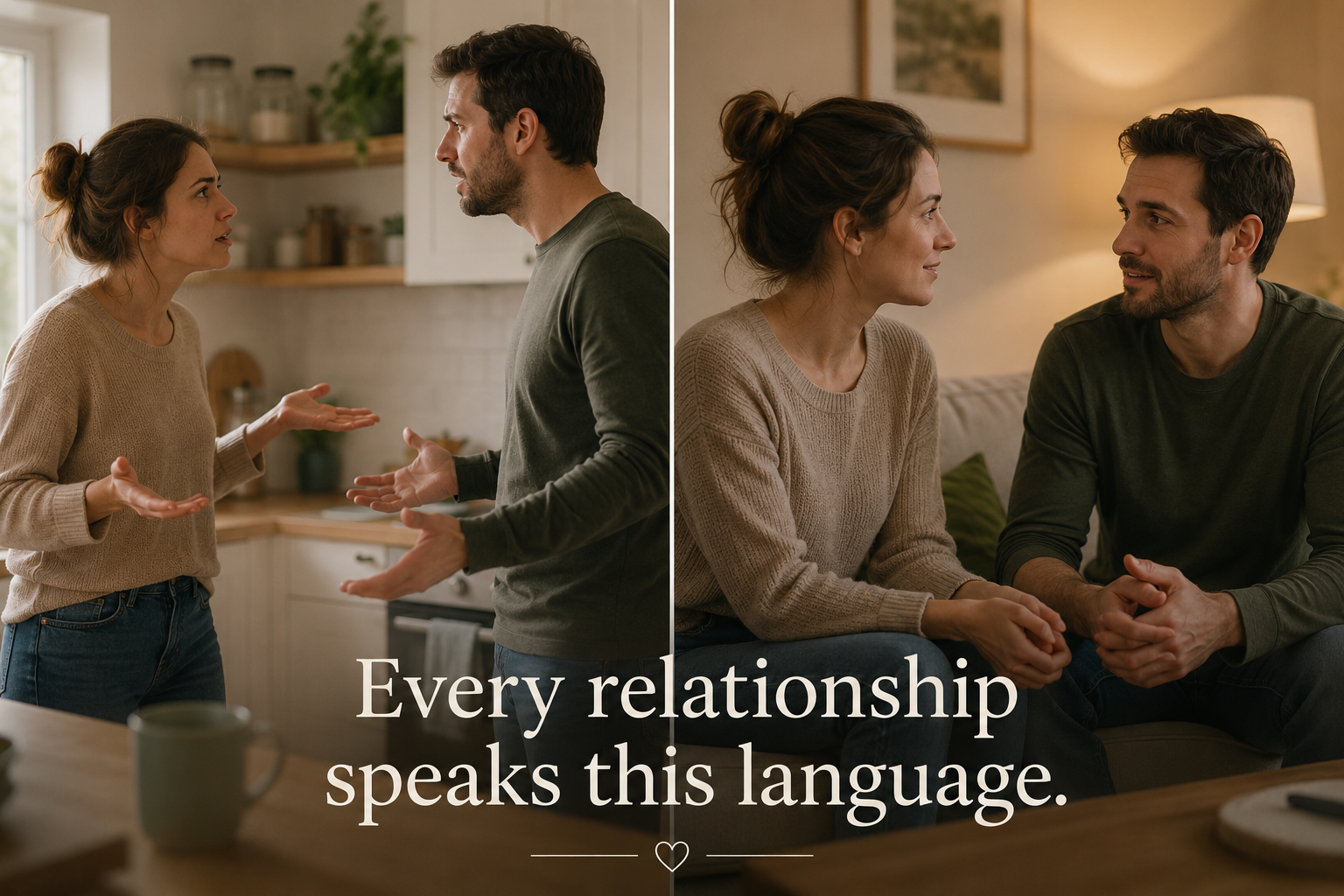
We have all been there. You are standing in the kitchen after a long day. Your partner says something about the dishes and suddenly you are both raising your voices over something that started so small. Before you know it, the real issue is not even the dishes anymore. It is feeling unseen or unheard or unappreciated. That moment when a tiny spark turns into a full blaze is conflict in its most human form.
I started this series because I believe conflict does not have to destroy connection. Whether you are in a vanilla relationship or exploring power exchange and D/s, conflict is the universal language every couple learns to speak. Sometimes fluently and sometimes even painfully. The good news is that we can all get better at it.
Conflict is simply the clash that happens when two people with different needs, perspectives, or expectations try to share one life. It is inevitable. Two unique humans will never see everything exactly the same way. That is not a flaw in your relationship. It is proof you are both real.
In everyday relationships the most common triggers tend to cluster around a few areas. Money and how it is spent, division of chores and emotional labor, intimacy and desire, how you each handle stress or family, and the big one, feeling like your partner does not truly hear you. These fights often start small yet they tap into deeper fears. Am I safe with you? Do I matter? Are we still a team?
Here is how it usually unfolds. A trigger hits, one person reacts, emotions rise, words get sharper, and you enter the escalation loop. If it keeps going you reach a rupture. There is silence, tears, slammed doors, or worse, things said that cannot be unsaid. The repair part is where most of us struggle. Yet it is also where the deepest intimacy is born.
Healthy conflict looks like this. Voices may rise but respect stays intact. You can take a break without it becoming abandonment. You still believe your partner has good intentions even when they mess up. Unhealthy patterns on the other hand show up as name calling, stonewalling for days, bringing up old wounds to win, or using silence as punishment. If you recognize those, it is time to slow down and get curious instead of critical.
So why do most of us still suck at conflict? We grew up watching parents who either exploded or shut down. Society tells us good relationships are effortless and conflict free. That is a lie. The couples who last are not the ones who never fight. They are the ones who learned how to fight fair and repair well.
This truth applies no matter your dynamic. Next Friday we step into the world of D/s, where power, protocol, and headspace add extra layers to these same human struggles. You will see how the fights can feel both familiar and completely different.
Until then, I want to hear from you. What is one conflict trigger that keeps showing up in your relationship? Let us know in the comments below. You are not alone in this, and together we can learn a better way.
Michele

Want the full series? You can find all six posts in the Clash & Consent series here: Clash & Consent Series
Free Bonus: Download the Conflict Repair Toolkit (PDF) with worksheets, scripts, and tools to use alongside this series → Download the Conflict Repair Toolkit



[…] is the final post in the series. If you missed the earlier ones, you can read Post 1 here: The Universal Language of Conflict, Post 2 here: Power, Protocol, and Pain, Post 3 here: Same Fight, Different Rules, Post 4 here: […]